
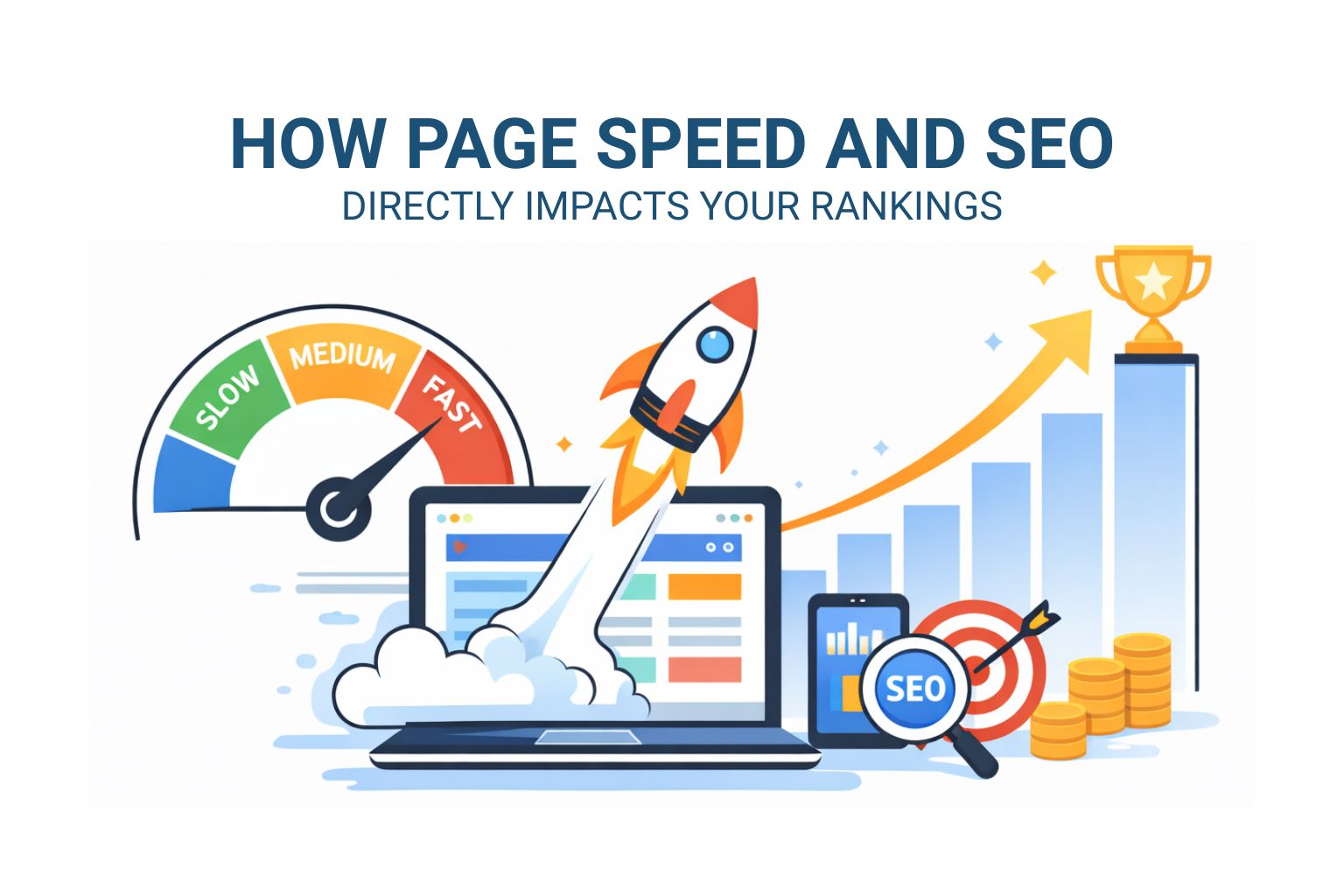
In today’s competitive digital landscape, page speed and SEO are more closely connected than ever. Search engines like Google prioritize fast-loading websites because they deliver a better user experience. As a result, if your website loads slowly, your rankings and traffic can suffer significantly.
Therefore, understanding how page speed affects SEO is no longer optional. Instead, it has become a core part of modern search engine optimization strategies.Experts at YSEO Agency emphasize that speed is a foundational part of any SEO strategy. In this guide, we’ll explore how website speed influences rankings, user behavior, and conversions, plus how you can improve your site performance effectively.
Why Page Speed Is a Critical SEO Ranking Factor?
Page speed measures how quickly a webpage loads its content. Since Google’s Page Experience Update, speed has been an official ranking factor for both desktop and mobile searches.
Fast-loading sites improve user experience, reduce bounce rates, and help search engines crawl your website more efficiently. Therefore, website speed SEO is a critical part of achieving higher rankings. Businesses looking for professional optimization can explore company website SEO services to enhance their site performance.
Key reasons page speed matters for SEO:
- Faster sites improve crawl efficiency
- Better user experience leads to longer sessions
- Reduced bounce rates send positive ranking signals
In short, page speed and SEO work together to determine how well your website performs in search results.
How Page Speed Affects SEO and User Experience
When a website loads slowly, users lose patience. In fact, studies show that users expect pages to load in under three seconds. If they don’t, they leave.
Because of this behavior, Google uses engagement metrics such as:
- Bounce rate
- Time on page
- Pages per session
Therefore, poor loading speed directly harms site performance SEO. On the other hand, faster websites naturally encourage users to explore more pages, improving overall rankings.
Additionally, faster websites build trust. When users can access content instantly, they perceive the brand as more professional and reliable.
Core Web Vitals Optimization and SEO Performance
Google measures page speed through Core Web Vitals, which are essential website performance metrics. These include:
- Largest Contentful Paint (LCP): It measures loading performance
- Interaction to Next Paint (INP): Measures interactivity
- Cumulative Layout Shift (CLS): Measures visual stability
Together, these metrics help Google understand how users experience your website. If your Core Web Vitals scores are poor, even high-quality content may struggle to rank. This is why Core Web Vitals optimization is a key part of improving page speed and SEO.
Mobile Page Speed Optimization: Why It Matters More Than Ever
Since Google uses mobile-first indexing, your mobile site speed is now more important than desktop performance.
Moreover, mobile users are often on slower networks. Therefore, if your site isn’t optimized for mobile loading speed, you risk losing both rankings and conversions.
Mobile page speed optimization tips include:
- Using responsive design
- Reducing large images
- Minimizing JavaScript execution
By improving mobile speed, you strengthen page speed and SEO performance across all devices and user segments.
Page Speed Test Tools You Should Be Using
To effectively improve speed, you first need accurate data. Fortunately, several page speed test tools can help analyze performance. Some of the best tools include:
- Google PageSpeed Insights
- Lighthouse
- GTmetrix
- WebPageTest
These tools provide insights into website performance metrics, identify bottlenecks, and suggest actionable improvements. Therefore, regular testing is essential for ongoing SEO success.
How to Improve Website Loading Speed for Better SEO
Improving speed doesn’t require rebuilding your entire site. Instead, small technical optimizations can can significantly boost page speed and SEO.
Effective ways to improve website loading speed:
- Compress and optimize images
- Enable browser caching
- Use a Content Delivery Network (CDN)
- Minify CSS, JavaScript, and HTML
- Reduce server response time
By implementing these steps, you’ll not only improve speed but also strengthen your overall page speed and SEO performance.
Website Speed SEO and Conversion Rates
Interestingly, page speed doesn’t just affect rankings, it also impacts revenue.
For example, faster websites:
- Increase conversion rates
- Improve user trust
- Reduce cart abandonment
Therefore, investing in speed optimization delivers both SEO and business benefits. In the long run, a fast website creates a competitive advantage that slow competitors struggle to match.
The Long-Term SEO Benefits of Optimized Site Performance
When your website consistently performs well, search engines reward it with:
- Higher rankings
- Faster indexing
- Improved crawl budget usage
Additionally, strong site performance SEO helps future-proof your website against algorithm updates. Since Google continues to emphasize user experience, page speed will remain a key ranking factor.
Page Speed and SEO Go Hand in Hand
In conclusion, page speed directly impacts your SEO rankings in multiple ways—from user experience and Core Web Vitals to mobile optimization and engagement metrics.
Therefore, if you want sustainable rankings and long-term growth, improving your website’s loading speed should be a top priority. By focusing on website speed SEO, using reliable page speed test tools, and optimizing Core Web Vitals, you can significantly improve visibility, traffic, and conversions.
If you want to take your website’s performance to the next level, contact us today to get expert advice and a customized SEO plan.