
Ecommerce SEO: 10 Powerful SEO Tips to Boost Online Sales
Running an online store is exciting, but it’s also highly competitive. Every day, thousands of new products are added to the internet. So, how do you make sure your products stand out? The answer lies in ecommerce SEO. Product pages are where customers decide whether to buy or leave. That’s why focusing on product page SEO is one of the smartest moves you can make for your online store. For businesses looking to grow faster, partnering with reliable ecommerce SEO services in Nepal can help improve search visibility, attract high-intent buyers, and drive consistent sales. In this blog, we’ll walk through practical and easy-to-follow tips that actually work, no jargon, no fluff, just proven strategies used by successful online stores. Why Ecommerce SEO Is So Important for Product Pages To begin with, product pages drive sales. However, if these pages don’t appear on search engines, potential customers may never even see them. That’s where SEO for online stores becomes crucial. When product pages are properly optimized: They rank higher on Google They attract users who are ready to buy They offer a better user experience As a result, good SEO doesn’t just bring traffic, it brings the right traffic. Start with the Right Keyword Research Before making any changes, you need to know what your customers are searching for. Instead of targeting only broad keywords, product pages should focus on keywords with clear buying intent. For example, using keywords like ecommerce seo, product page seo, and specific product-related terms helps attract users who are closer to making a purchase. Additionally, long-tail keywords such as “best running shoes for men” or “wireless headphones under budget” often convert better. Therefore, smart keyword research lays the foundation for successful optimization. Create Clean and SEO-Friendly URLs Next, let’s talk about URLs. Although they may seem small, URLs play an important role in SEO. A good product page URL should be: Short and readable Easy to understand Relevant to the product For instance, a URL like /leather-wallet-men is far better than /product?id=4589. Because of this, clean URLs help both users and search engines understand your page better. Optimize Product Titles the Right Way Your product title is one of the first things users and search engines notice. Therefore, it should clearly describe what you’re selling while remaining natural. Here’s what works best: Include the main product keyword Keep it clear and simple Avoid keyword stuffing A well-written title improves product page SEO and encourages users to click. Most importantly, it should sound human, not robotic. Follow Product Description SEO Best Practices This is where many online stores go wrong. Using copied or manufacturer-provided descriptions can seriously hurt your rankings. Instead, unique and helpful content always performs better. Some effective product description SEO best practices include: Writing original descriptions in your own words Explaining how the product helps the customer Using bullet points for easy reading Naturally adding relevant keywords In addition, focusing on benefits rather than just features makes the content more engaging. As a result, users stay longer and are more likely to convert. Optimize Images Without Slowing Down Your Site Images are essential for ecommerce, but unoptimized images can slow your site down. Since page speed affects rankings, image optimization is a must. To optimize images: Compress them without losing quality Use descriptive file names Add meaningful alt text For example, instead of naming an image IMG123.jpg, use something like sports-shoes-product-page.jpg. This small step supports ecommerce SEO and improves accessibility. Improve Page Speed and Mobile Experience Nowadays, most people shop on their phones. So, if your product pages are slow or hard to use on mobile, users will leave quickly. To improve performance: Use fast and reliable hosting Optimize scripts and files Ensure your design is mobile-friendly Because of this, faster pages not only rank better but also lead to higher sales. Use Structured Data for Better Visibility Structured data helps search engines understand your product details clearly. When used correctly, it can show extra information like price, availability, and reviews directly in search results. This improves visibility and increases click-through rates. Therefore, structured data plays a strong role in on page SEO for ecommerce. Strengthen Internal Linking Across Product Pages Internal linking is often overlooked, yet it’s extremely powerful. Linking related products or categories helps users explore your store more easily. Benefits of internal linking include: Better website navigation Improved crawlability Longer user sessions As a result, internal links support both SEO and user experience. Encourage Customer Reviews and Ratings Customer reviews add trust and authenticity to your product pages. On top of that, they generate fresh content, which search engines love. To make the most of reviews: Allow genuine customer feedback Display ratings clearly Use review schema where possible Consequently, reviews improve product page SEO while boosting conversions. Monitor Performance and Keep Optimizing Finally, remember that SEO is an ongoing process. What works today may need improvement tomorrow. Use tools like Google Search Console and Analytics to: Track keyword rankings Monitor traffic and conversions Identify pages that need improvement By consistently refining your strategy, your ecommerce optimization tips will deliver long-term results. In conclusion, strong ecommerce SEO starts with well-optimized product pages. By focusing on product page SEO, following proven product description SEO best practices, and improving overall on page SEO for ecommerce, you can increase visibility, traffic, and sales. Partnering with an experienced team like YSEO Agency can further help you implement the right strategies, avoid common mistakes, and achieve sustainable growth for your online store. Contact us today to talk through your goals and get a customized strategy designed to deliver real results.
The Future of SEO: Predictions for the Next 5 Years
Search Engine Optimization has never been static. From keyword stuffing to user-first content, SEO has evolved alongside technology and user behavior. As we look ahead, the future of SEO promises even more change driven by artificial intelligence, shifting search engine trends, and rising user expectations. So, what exactly will SEO look like over the next five years? Let’s explore the most important SEO predictions, emerging SEO trends for 2025, and the future of SEO, including how businesses can stay ahead of the curve. 1. AI Will Reshape How SEO Works (But Not Kill It) First and foremost, generative AI in SEO will play a major role in the coming years. Tools powered by AI are already assisting with keyword research, content ideation, technical audits, and even competitor analysis. However, while AI will speed up workflows, it won’t replace human strategy. Search engines are becoming better at detecting intent, originality, and value. Therefore, AI-generated content without human insight, editing, and experience will struggle to rank. In other words, SEO professionals who learn how to use AI rather than rely on it blindly will gain a competitive advantage. AI is a tool, not a shortcut. Human creativity, expertise, and authenticity will remain critical. 2. Search Intent Will Matter More Than Keywords In the past, ranking often depended on matching exact keywords. Today, and especially in the future of SEO, understanding search intent is far more important. Search engines now focus on: Why a user is searching What problem they want to solve What format best answers their query As a result, content that fully satisfies intent whether informational, transactional, or navigational will outperform keyword-stuffed pages. For example, instead of targeting only “SEO predictions,” content must explain what will change, why it matters, and how to prepare. 3. SEO Will Shift Toward Topical Authority Another major SEO prediction is the rise of topical authority. Rather than ranking single pages, search engines increasingly reward websites that demonstrate deep knowledge across an entire subject. This means: Interlinked content clusters Consistent publishing within a niche Clear expertise signals Consequently, brands that focus on long-term content strategies instead of isolated blog posts will see stronger results. If you want to win in the future of SEO, you won’t just rank for one keyword—you’ll own the topic. 4. Search Engine Trends Will Favor User Experience User experience (UX) is no longer optional. It’s already a ranking factor and its importance will only grow. Key UX elements include: Page speed Mobile optimization Clear navigation Readable content structure Low bounce rates Moreover, Google’s Core Web Vitals will continue to evolve, rewarding websites that offer fast, smooth, and engaging experiences. As a result, SEO and UX will become inseparable disciplines over the next five years. 5. Voice and Visual Search Will Gain More Ground With the rise of smart assistants and image-based platforms, search engine trends are moving beyond traditional text queries. Voice search favors: Conversational keywords Question-based content Local optimization Visual search, on the other hand, relies on: Image optimization Alt text accuracy Structured data Although these aren’t replacing traditional search yet, they will significantly influence SEO trends 2025 and beyond. 6. EEAT Will Become Non-Negotiable Experience, Expertise, Authoritativeness, and Trustworthiness, EEAT Guidelines are already critical but in the next five years, they will define success. Search engines want to rank content created by: Real people With real experience Providing real value Therefore, showing author bios, citing sources, sharing case studies, and updating content regularly will be more important than ever. Simply put, credibility will outweigh clever optimization tricks. 7. Zero-Click Searches Will Continue to Rise Featured snippets, knowledge panels, and AI-generated answers are increasing zero-click searches. While this may reduce traffic for some queries, it also creates new opportunities for visibility. Smart SEO strategies will focus on: Owning featured snippets Optimizing for brand searches Driving high-intent traffic instead of raw volume In the future of SEO, quality traffic will matter more than quantity. 8. Local and Personalized Search Will Expand Search results are becoming more personalized based on: Location Search history Device User behavior This means local SEO, structured data, and personalized content will play a larger role in ranking success. Businesses that ignore personalization risk becoming invisible. How to Prepare for the Future of SEO To stay ahead over the next five years, focus on these fundamentals: Create helpful, people-first content Build topical authority in your niche Use generative AI in SEO wisely not blindly Prioritize user experience and performance Adapt to new search engine trends early Above all, remain flexible. SEO will continue to evolve, but the goal remains the same: help users find the best possible answers. The future of SEO is not about gaming algorithms; it’s about understanding people. While AI, automation, and changing technologies will reshape the landscape, human insight will always sit at the core of successful optimization—especially when guided by an experienced SEO professional in Nepal who understands both global trends and local search behavior. By following these SEO predictions and adapting to upcoming SEO trends 2025, businesses and marketers can not only survive but thrive in the next era of search. If you’re looking for expert guidance or want to future-proof your digital presence, contact us today to work with a trusted SEO professional in Nepal.
How Page Speed and SEO Directly Impacts Your Rankings
In today’s competitive digital landscape, page speed and SEO are more closely connected than ever. Search engines like Google prioritize fast-loading websites because they deliver a better user experience. As a result, if your website loads slowly, your rankings and traffic can suffer significantly. Therefore, understanding how page speed affects SEO is no longer optional. Instead, it has become a core part of modern search engine optimization strategies.Experts at YSEO Agency emphasize that speed is a foundational part of any SEO strategy. In this guide, we’ll explore how website speed influences rankings, user behavior, and conversions, plus how you can improve your site performance effectively. Why Page Speed Is a Critical SEO Ranking Factor? Page speed measures how quickly a webpage loads its content. Since Google’s Page Experience Update, speed has been an official ranking factor for both desktop and mobile searches. Fast-loading sites improve user experience, reduce bounce rates, and help search engines crawl your website more efficiently. Therefore, website speed SEO is a critical part of achieving higher rankings. Businesses looking for professional optimization can explore company website SEO services to enhance their site performance. Key reasons page speed matters for SEO: Faster sites improve crawl efficiency Better user experience leads to longer sessions Reduced bounce rates send positive ranking signals In short, page speed and SEO work together to determine how well your website performs in search results. How Page Speed Affects SEO and User Experience When a website loads slowly, users lose patience. In fact, studies show that users expect pages to load in under three seconds. If they don’t, they leave. Because of this behavior, Google uses engagement metrics such as: Bounce rate Time on page Pages per session Therefore, poor loading speed directly harms site performance SEO. On the other hand, faster websites naturally encourage users to explore more pages, improving overall rankings. Additionally, faster websites build trust. When users can access content instantly, they perceive the brand as more professional and reliable. Core Web Vitals Optimization and SEO Performance Google measures page speed through Core Web Vitals, which are essential website performance metrics. These include: Largest Contentful Paint (LCP): It measures loading performance Interaction to Next Paint (INP): Measures interactivity Cumulative Layout Shift (CLS): Measures visual stability Together, these metrics help Google understand how users experience your website. If your Core Web Vitals scores are poor, even high-quality content may struggle to rank. This is why Core Web Vitals optimization is a key part of improving page speed and SEO. Mobile Page Speed Optimization: Why It Matters More Than Ever Since Google uses mobile-first indexing, your mobile site speed is now more important than desktop performance. Moreover, mobile users are often on slower networks. Therefore, if your site isn’t optimized for mobile loading speed, you risk losing both rankings and conversions. Mobile page speed optimization tips include: Using responsive design Reducing large images Minimizing JavaScript execution By improving mobile speed, you strengthen page speed and SEO performance across all devices and user segments. Page Speed Test Tools You Should Be Using To effectively improve speed, you first need accurate data. Fortunately, several page speed test tools can help analyze performance. Some of the best tools include: Google PageSpeed Insights Lighthouse GTmetrix WebPageTest These tools provide insights into website performance metrics, identify bottlenecks, and suggest actionable improvements. Therefore, regular testing is essential for ongoing SEO success. How to Improve Website Loading Speed for Better SEO Improving speed doesn’t require rebuilding your entire site. Instead, small technical optimizations can can significantly boost page speed and SEO. Effective ways to improve website loading speed: Compress and optimize images Enable browser caching Use a Content Delivery Network (CDN) Minify CSS, JavaScript, and HTML Reduce server response time By implementing these steps, you’ll not only improve speed but also strengthen your overall page speed and SEO performance. Website Speed SEO and Conversion Rates Interestingly, page speed doesn’t just affect rankings, it also impacts revenue. For example, faster websites: Increase conversion rates Improve user trust Reduce cart abandonment Therefore, investing in speed optimization delivers both SEO and business benefits. In the long run, a fast website creates a competitive advantage that slow competitors struggle to match. The Long-Term SEO Benefits of Optimized Site Performance When your website consistently performs well, search engines reward it with: Higher rankings Faster indexing Improved crawl budget usage Additionally, strong site performance SEO helps future-proof your website against algorithm updates. Since Google continues to emphasize user experience, page speed will remain a key ranking factor. Page Speed and SEO Go Hand in Hand In conclusion, page speed directly impacts your SEO rankings in multiple ways—from user experience and Core Web Vitals to mobile optimization and engagement metrics. Therefore, if you want sustainable rankings and long-term growth, improving your website’s loading speed should be a top priority. By focusing on website speed SEO, using reliable page speed test tools, and optimizing Core Web Vitals, you can significantly improve visibility, traffic, and conversions. If you want to take your website’s performance to the next level, contact us today to get expert advice and a customized SEO plan.
Preparing Your Website for AI Search: A Complete Guide to AI in SEO
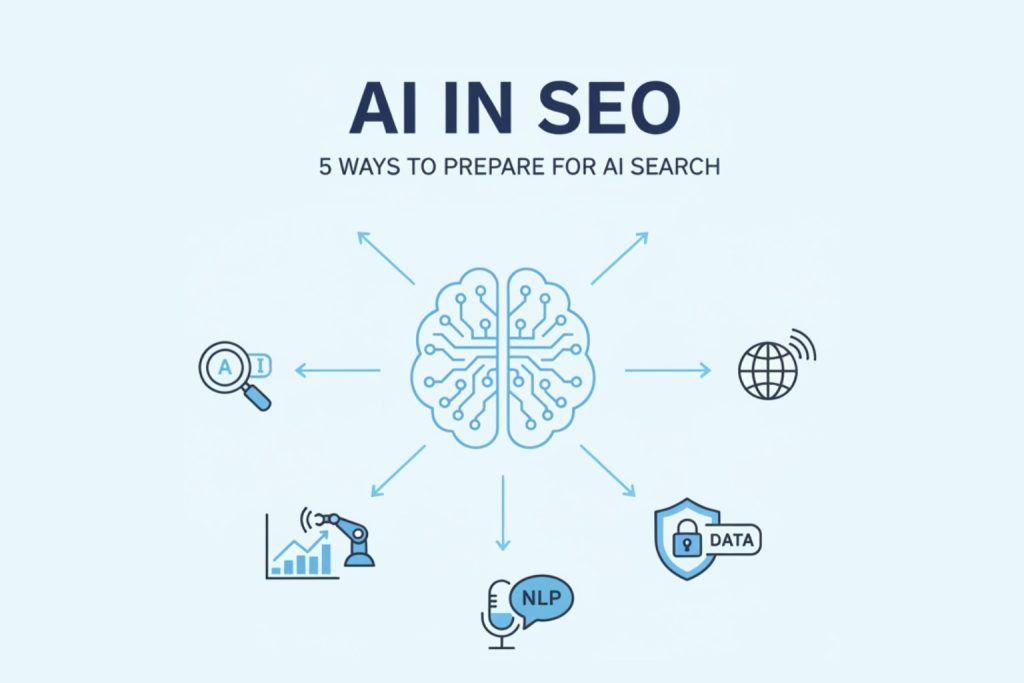
Search engines are evolving faster than ever. With the rise of AI-powered search, traditional SEO alone is no longer enough. Instead, businesses must now focus on AI in SEO to stay visible, relevant, and competitive. Today, search is no longer just about keywords. Instead, it’s about context, intent, and meaning. As a result, preparing your website for AI search optimization has become essential. In this guide, you’ll learn how to optimize your website for AI search, understand Google SGE, and apply practical AI SEO strategies that work for both users and AI systems. What Is AI Search and Why Does It Matter? AI search refers to search engines that use artificial intelligence to understand queries, generate answers, and summarize content. For example, tools like Google SGE (Search Generative Experience), ChatGPT, and Gemini search are transforming how users find information.Instead of showing only links, AI-powered search now:Understands search intent Generates direct answers Pulls information from multiple sources Focuses on meaning rather than keywords Because of this, search with AI requires a smarter, more semantic approach to SEO. The Role of AI in SEO Today AI in SEO is not about replacing traditional SEO. Instead, it enhances it. AI-driven search engines analyze: Content quality Context and relevance Semantic relationships User intent and engagement Therefore, websites that focus on clear structure, helpful content, and semantic SEO perform better in AI-powered results. Why Keyword Research Still Matters in AI Search? Many people believe AI search has eliminated the need for keywords. In reality, that’s not true. A strong keyword research guide helps you understand: What users are searching for How they phrase questions What problems they want solved Although AI understands language better, keyword research for SEO still provides insights into user intent. Therefore, instead of targeting one keyword, you should group related keywords and topics together. Understanding Google SGE and Generative Search Optimization Google SGE uses generative AI to provide summarized answers at the top of search results. This means fewer clicks for low-quality pages and more visibility for authoritative, well-structured content. To succeed in AI in SEO, you must focus on generative search optimization, which includes: Answering questions clearly Structuring content for AI readability Covering topics comprehensively In short, Google now prefers depth over density. How to Optimize Your Website for AI Search? 1. Focus on Semantic SEO, Not Just Keywords Semantic SEO helps search engines understand what your content means, not just what words it uses. To improve semantic SEO: Use related terms and concepts naturally Cover topics fully instead of repeating keywords Write for humans first, AI second As a result, your content becomes more valuable for AI SEO and traditional search alike. Lorem ipsum dolor sit amet, consectetur adipiscing elit. Ut elit tellus, luctus nec ullamcorper mattis, pulvinar dapibus leo. 2. Create Clear, Structured, and Helpful Content AI systems love clarity. Therefore: Use proper headings (H2, H3) Write short, simple paragraphs Use bullet points where helpful Additionally, answer common questions directly. This improves visibility in AI-generated answers. 3. Optimize for ChatGPT and Gemini Search Optimizing for ChatGPT and Gemini search requires a conversational and informative tone. To do this effectively: Write in natural language Provide clear explanations Avoid keyword stuffing Because AI tools pull information from trusted, easy-to-understand content, simplicity wins. 4. Strengthen Your E-E-A-T Signals AI-powered search heavily relies on trust. That’s why E-E-A-T guidelines are more important than ever. So, make sure to: Add author bios Cite credible sources Keep content updated This helps AI systems trust your content for AI search optimization. 5. Improve Technical SEO for AI Crawlers Although content is critical, technical SEO still plays a major role. Ensure that: Your site loads fast It’s mobile-friendly Schema markup is implemented Consequently, AI can crawl, understand, and summarize your content more effectively. Best AI SEO Strategies to Follow in 2026 and Beyond Here are proven AI in SEO strategies you should implement today: Write content that solves real problems Optimize for topics, not just keywords Use FAQs to answer intent-based queries Update old content regularly Track performance in AI-driven SERPs Over time, these strategies help you stay visible as optimizing for AI becomes the new SEO standard. The Future of AI SEO The future of search is already here. AI SEO is no longer optional, it’s essential. By focusing on AI in SEO, semantic SEO, and generative search optimization, you can prepare your website for AI-powered search experiences like Google SGE, ChatGPT, and Gemini. At YSEO Agency, we help brands combine traditional SEO fundamentals with modern AI SEO strategies to improve visibility, authority, and long-term growth. Ultimately, websites that prioritize clarity, context, and value will win in the era of AI search. Contact us!
Choosing the Best SEO Tools for Agencies
Choosing the right SEO tools is one of the most important decisions for any digital marketing agency. Since agencies handle multiple clients, projects, and campaigns at the same time, having the right SEO software can save time, improve accuracy, and deliver better results. However, with so many options available, finding the best SEO tools for agencies can feel overwhelming. For example, any growing agency offering SEO services in Nepal must handle keyword tracking, reporting, audits, and link building across different industries. Therefore, this guide will help you understand different types of SEO management tools, their features, and how to select the right ones for your agency’s needs. Why Choosing the Best SEO Tools for Agencies Matters Using the best SEO tools for agencies directly impacts productivity, campaign performance, and client satisfaction. Without the right tools, agencies often struggle with manual work, inconsistent reporting, and missed optimization opportunities. On the other hand, well-chosen SEO tools allow agencies to manage multiple clients efficiently, track progress accurately, and deliver measurable results. As a result, agencies can scale their services without compromising quality. Why Agencies Need Specialized SEO Tools Unlike individual marketers, agencies require tools that can manage multiple websites, track performance across clients, and generate professional reports. As a result, agency-focused SEO tools usually offer automation, collaboration features, and scalability. Moreover, the best SEO tools for agencies are designed to support team workflows, white-label reporting, and long-term growth. This makes them essential for agencies aiming to build trust and retain clients. Key Factors to Consider When Choosing SEO Tools for Agencies Before investing in any SEO software, it’s important to evaluate a few key aspects: Ease of use and learning curve Ability to manage multiple clients Automation and workflow support Accurate data and insights Customizable reporting options Scalability as your agency grows Keeping these points in mind will help you choose the best SEO tools for agencies that align with your business goals and client expectations. Essential Types of SEO Tools for Agencies 1. SEO Management Tools SEO management tools act as an all-in-one solution for agencies. They help manage projects, track tasks, monitor performance, and organize client data in one place. As a result, teams can work more efficiently and stay aligned. For agencies handling multiple campaigns, SEO management tools are a core part of the best SEO tools for agencies stack. 2. Keyword Research Tools Keyword research tools are essential for identifying search terms that drive traffic and conversions. These tools help agencies find high-value keywords, analyze search intent, and understand competition. Therefore, they play a key role in building strong SEO strategies. 3. SEO Reporting Tools for Agencies Clear and professional reporting is crucial for client communication. SEO reporting tools for agencies allow you to create automated, white-label reports that show rankings, traffic, backlinks, and overall performance. Consequently, clients can easily understand the value of your work. 4. Rank Tracking Tools Rank tracking tools monitor keyword positions across search engines and locations. With accurate rank tracking, agencies can measure progress, identify trends, and adjust strategies accordingly. In addition, these tools help prove SEO success over time. 5. Backlink Analysis Tools Backlinks remain a strong ranking factor. Backlink analysis tools help agencies analyze link profiles, identify toxic links, and discover new link opportunities. As a result, agencies can build stronger and safer link-building strategies. 6. Link Building Tools Link building tools support outreach, prospecting, and relationship management. They help agencies find relevant websites, track outreach campaigns, and measure success. Therefore, link building becomes more organized and effective. 7. Site Audit Tools Site audit tools analyze websites for technical SEO issues such as broken links, slow loading pages, crawl errors, and mobile usability problems. Since technical SEO impacts rankings significantly, these tools are essential for maintaining healthy websites. 8. SEO Automation Tools SEO automation tools reduce repetitive manual tasks such as reporting, rank tracking, and audits. By automating these processes, agencies save time and can focus more on strategy and client growth. SEO Tools Comparison: Choosing What Fits Your Agency When comparing SEO tools, it’s important to avoid choosing based only on popularity. Instead, focus on what your agency truly needs. For example, smaller agencies may prefer lightweight SEO software with essential features, while larger agencies may require advanced automation, API access, and team collaboration. Therefore, an effective SEO tools comparison helps agencies identify the best SEO tools for agencies based on functionality, pricing, and scalability. How the Best SEO Tools for Agencies Support Long-Term Growth The best SEO tools for agencies do more than just track rankings. They help improve workflow efficiency, enhance decision-making, and support consistent results. Additionally, agencies offering local SEO service or competitive SEO campaigns benefit greatly from tools that provide accurate data and automation. Over time, this leads to better performance, stronger client relationships, and sustainable agency growth. Choosing the best SEO tools for agencies is not about using every tool available, but about using the right combination. When selected carefully, SEO management tools, keyword research tools, reporting tools, and automation software can significantly improve efficiency and results. Ultimately, the right SEO software will help your agency deliver better performance, build client trust, and grow sustainably. Ready to Improve Your SEO Strategy? Text Here If you’re looking for reliable SEO services, advanced local SEO service, or expert guidance on choosing the right SEO tools, we’re here to help. Reach out to us today and take the next step toward smarter, scalable SEO growth.
A Deep Dive into Google E-E-A-T Guidelines: What It Means for SEO Content Quality
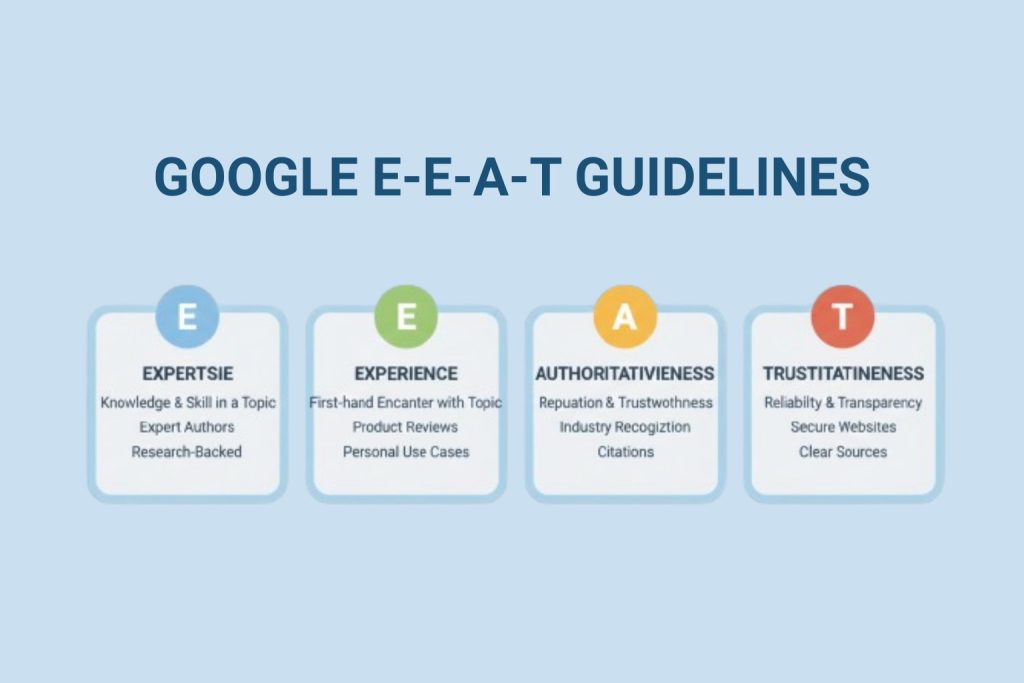
In today’s competitive SEO landscape, understanding Google E-E-A-T guidelines is essential for content creators and business owners alike. Simply put, these guidelines help content stand out not just for search engines but for real human users too. At Y SEO Agency, we consistently apply E-E-A-T principles while delivering result-driven SEO services for long-term growth. In this blog, we’ll break down exactly what Google E-E-A-T is, why it matters, and how you can apply it to your SEO strategy to improve content quality and rankings. What Are Google E-E-A-T? Google’s E-E-A-T stands for Experience, Expertise, Authoritativeness, and Trustworthiness. These are quality evaluation principles used in Google’s Search Quality Rater Guidelines to assess how well content satisfies user needs. This doesn’t mean Google directly uses these as ranking factors, but they influence how content quality is perceived in search results. 1. Experience Experience refers to whether the content creator has firsthand, practical knowledge of the topic like genuine product use or real-life insights. 2. Expertise Expertise signals that the author is knowledgeable and credible about the subject. For example, an article about SEO by a seasoned SEO expert naturally carries more weight. 3. Authoritativeness Authority is judged by reputation and recognition, how other experts, websites, or users view your content and brand. 4. Trustworthiness Trust is about reliability, accuracy, and transparency, such as clear contact details, secure site practices, and honest content. Why E-E-A-T Matters for SEO? Although Google doesn’t treat E-E-A-T as a direct ranking signal, it strongly influences content quality which affects how well your pages perform in search results. Here’s why: It builds user trust and engagement. It improves the perceived authority of your brand. It helps differentiate your content from low-quality or misleading pages. It’s especially important for YMYL (Your Money or Your Life) topics that could impact someone’s well-being or financial decisions. How Google Assesses E-E-A-T Google uses human quality raters — real people who evaluate search results against the Search Quality Rater Guidelines. These raters don’t directly influence ranking, but their feedback shapes algorithm updates. Quality raters assess: Whether content answers a specific query well The credibility of the publisher and author Whether the content is safe and trustworthy How clearly the content demonstrates experience and expertise This emphasis on holistic quality over keyword stuffing or superficial metrics highlights why E-E-A-T is critical. How to Improve E-E-A-T Content for SEO 1. Write From Experience Include case studies, examples, or personal insights when applicable. Real stories enhance E-E-A-T and help connect with users. 2. Strengthen Content Expertise Highlight author credentials, qualifications, or years of experience. A strong author bio builds confidence in your content. 3. Use Strategic Internal Linking Internal links guide users and search engines. For example, when discussing content quality, naturally link to your SEO content services to reinforce topical relevance. 4. Build Authority Gradually Publish in-depth blogs, earn backlinks, and maintain consistent branding across your site. Authority grows when content aligns with expertise and user intent. 5. Maintain Trust Signals Always keep your website updated, secure, and transparent. Pages like service descriptions, contact info, and helpful blogs all contribute to trustworthiness. E-E-A-T SEO Best Practices Focus on helpful, user-first content Avoid thin or AI-generated fluff Use keywords naturally (not forcefully) Support claims with real experience Internally link relevant pages consistently When implemented correctly, Google E-E-A-T guidelines become a powerful framework for sustainable SEO success. Common E-E-A-T Mistakes to Avoid Hidden or missing author information – Users and Google can’t tell who wrote the content. Thin content with no real insight – Pages that add little value won’t convince quality raters. Poor sourcing or no references – Claims without evidence weaken trust. Keyword stuffing – Focus on helpful content, not artificial ranking tricks. Ignoring user intent – Great content must solve a problem or answer a question. Google E-E-A-T guidelines are not just an SEO buzzword; they’re a framework for creating high-quality, user-first content. By focusing on experience, expertise, authority, and trust, you can improve your content’s effectiveness, relevance, and visibility on search engines. Integrating these guidelines into your SEO strategy helps you build stronger relationships with both users and Google’s algorithms in the long term. Contact us for SEO services!
Content Refresh SEO: How to Update and Refresh Old Blog Posts for More Traffic
Creating new blog posts is important, but over time, older content often loses traffic. However, that doesn’t mean those posts are useless. In fact, with the right content refresh SEO strategy, you can turn outdated blogs into traffic-generating assets again. Instead of writing from scratch, updating existing content saves time and delivers faster SEO results. Moreover, search engines prefer fresh and updated information. Therefore, refreshing old blog posts should be a key part of your content marketing strategy. In this blog, you’ll learn how to update and refresh old blog posts for more traffic using simple and effective SEO techniques. If you’re new to SEO, you can start by exploring keyword research guides to understand key concepts and clarify search intent before updating old posts. At YSEO Agency, we regularly use content refresh SEO techniques to help businesses improve rankings and recover lost traffic through strategic updates rather than rewriting content from scratch. Why Content Refresh SEO Is Important? Over time, blog posts can become outdated due to changes in trends, data, or search intent. As a result, rankings slowly drop. However, content refresh seo helps you: Improve search rankings Increase organic traffic Match current user intent Boost engagement and time on page Additionally, updating old content signals search engines that your website is active and relevant. Step 1: Identify Blog Posts That Need Updating First of all, not every blog needs a refresh. Therefore, start by finding posts that: Are ranking on page 2 or 3 Have declining traffic Contain outdated information Have low engagement Using tools like Google Search Console or Analytics can help you spot these pages easily. Once identified, you can focus your SEO content update efforts where they matter most. Step 2: Update Keywords and Search Intent Next, review your target keywords. Over time, search intent may change, and your content may no longer match what users are looking for. For effective blog SEO optimization: Re-check your primary and secondary keywords Add related terms naturally Remove keyword stuffing Optimize headings and subheadings As a result, your content aligns better with current searches and performs well in SERPs. Step 3: Improve Content Quality and Readability Now, focus on improving the actual content. Instead of just adding words, aim to add value. You can: Update outdated facts and statistics Add new examples or insights Simplify complex sentences Use bullet points for clarity Moreover, adding transition words improves flow and keeps readers engaged. This is a key part of SEO content update tips that many overlook. Step 4: Refresh Headings, Meta Tags, and Internal Links Another important step in SEO content update is on-page optimization. Make sure to: Update the H1 and subheadings if needed Improve the SEO title and meta description Add internal links to newer content Fix broken links Consequently, your refreshed blog becomes more crawlable and user-friendly. Learn more about optimizing company sites with our professional website seo services. Step 5: Repurpose Content for Better Reach One smart way to boost traffic is learning how to repurpose content. For example, you can: Turn blog posts into social media snippets Create infographics or short videos Update and re-share the post via email This approach strengthens your overall content marketing strategy and helps your refreshed content reach a wider audience. Step 6: Update the Publish Date and Promote Again Finally, once your updates are complete, change the publish or “last updated” date. This shows both users and search engines that the content is fresh. After that: Share it on social media Add it to newsletters Submit it for re-indexing in Google Search Console Step 7: Leverage Analytics to Track Content Refresh Performance Updating content is just the first part; measuring its impact ensures your efforts are effective. Use analytics tools to track key metrics after refreshing your posts. Here’s how to do it: Monitor Organic Traffic Changes: Check if traffic to the updated post increases over time. Compare before and after metrics to assess improvements. Track Keyword Rankings: See if your refreshed content now ranks higher for target and related keywords. Measure Engagement Metrics: Look at bounce rate, average session duration, and scroll depth. Increased engagement indicates your content resonates better with users. Identify New Opportunities: Analytics can reveal gaps where your refreshed content can be linked to other high-performing posts or optimized further. By regularly analyzing performance, you can refine your content refresh strategy and focus on updates that deliver the best SEO ROI. Refreshing old content is one of the easiest ways to grow organic traffic. When done correctly, content refresh seo delivers better rankings without creating new posts from scratch. By following these SEO content update tips, focusing on blog SEO optimization, and repurposing content wisely, you can maximize your website’s performance and long-term growth. If you want consistent traffic, make content updates a regular part of your SEO strategy. Thus, if you want professional help refreshing your content and boosting traffic? Reach out to us!
Technical SEO Explained: How to Optimize Your Website
When people talk about SEO, most attention goes toward content writing, keywords, and backlinks. However, technical SEO forms the strong, invisible foundation that decides whether search engines can even access your content in the first place. Without it, your website may remain undiscovered, no matter how good your content is. Therefore, understanding the core of technical SEO is essential for building a healthy, search-friendly website. In this detailed technical SEO guide, we will explore what technical SEO is, why it matters, and how you can improve crawlability, indexing, website speed optimization, XML sitemaps, mobile-friendly SEO, and more. Additionally, you’ll find a practical technical SEO audit checklist at the end to help you analyze your website step-by-step. And if you ever need expert help, Y SEO Agengy can guide you with professional SEO solutions. What is Technical SEO? Technical SEO refers to the backend improvements that help search engines crawl, understand, and index your website effectively. It includes optimizing speed, mobile usability, broken links, HTTP/HTTPS, XML sitemaps, robots.txt, core web vitals, structured data, and server performance. While content explains the value of your website, technical SEO ensures search engines can find, scan, and evaluate it without obstacles. Technical SEO focuses on: How fast your website loads How easily search engines can crawl pages Whether your site architecture is easy to navigate If your pages are correctly indexed Whether your site structure is consistent How well your mobile version performs How secure and stable your site is Without fixing these elements, it becomes extremely difficult to rank even with amazing content. Importance of Technical SEO The importance of technical SEO lies in its direct connection to search visibility and user experience. Search engines prefer websites that load fast, are mobile-friendly, safe to use, and easy to crawl. Technical SEO is important because: Search engines cannot rank what they cannot crawl A fast website keeps users engaged Mobile-first indexing gives priority to mobile usability Structured websites help Google understand your content Technical issues can silently damage rankings This is especially important for businesses targeting specific regions. For example, companies focused on growing locally can benefit greatly when technical SEO is combined with strong Local SEO services. Together, they help improve both local visibility and search engine performance. Website Speed Optimization Website speed optimization is one of the most crucial ranking factors in technical SEO. Slow pages frustrate users, increase bounce rates, and push your website down in the search results. How to Improve Website Speed: Use compressed images (WebP, AVIF, JPG) Enable browser caching Minify CSS, JavaScript, and HTML Use a lightweight theme or framework Upgrade hosting to a faster server or cloud hosting Implement a CDN (Content Delivery Network) Avoid unnecessary plugins (especially on WordPress) Why Website Speed Matters: Faster websites receive more organic traffic Users stay longer on fast sites Search engines reward speed with better rankings Improved page speed helps meet Core Web Vitals, Google’s performance standards. Furthermore, speed plays an even bigger role for online stores. Many e-commerce websites rely on fast product pages, clean structure, and stable hosting. That’s why many businesses choose E-commerce SEO Services to keep their store technically sound and highly visible. Crawlability and Indexing Search engines discover your website through crawling. After crawling, they store your pages in the index. Together, crawlability and indexing determine whether your content appears on Google at all. Crawlability refers to: How easily search bots can move through your website Whether internal links help search engines navigate Whether robots.txt accidentally blocks pages If your site architecture is logical and easy to follow Indexing refers to: Whether your pages are added to Google’s database How accurately Google reads and stores your content Tips to Improve Crawlability & Indexing: Use a clear, simple URL structure Fix broken links and remove unnecessary redirects Avoid orphan pages (pages with no internal links pointing to them) Make sure important pages are not blocked in robots.txt Allow indexing of all meaningful, unique pages Add proper canonical tags to prevent duplicate content issues Keep your site architecture structured like a hierarchy (Home > Category > Page) Fortunately, tools like Google Search Console let you see which pages are indexed, which are not, and what issues might be blocking crawlers XML Sitemap Optimization An XML sitemap is essentially a roadmap of your website. It helps search engines find, crawl, and understand important URLs quickly. Why XML Sitemap Optimization Matters: It gives Google a clear list of all index-worthy pages It helps crawlers find new or updated content faster It prevents important pages from being missed How to Optimize Your XML Sitemap: Include only indexable pages Exclude admin pages, filters, or duplicate content Update the sitemap automatically when content changes Submit the sitemap to Google Search Console Keep the structure clean and simple Ensure all URLs return status code 200 (OK) Therefore, a well-optimized XML sitemap supports crawlability and ensures better search engine coverage. Mobile-Friendly SEO Since Google has adopted mobile-first indexing, search engines now evaluate the mobile version of your site before the desktop version. Therefore, mobile-friendly SEO is no longer optional. Key Elements of Mobile-Friendly SEO: Responsive design that adapts to different screen sizes Readable text without zooming Easy-to-tap buttons and links Compressed images for faster mobile loading Simple navigation menus Avoid pop-ups that cover the entire screen Why Mobile Optimization Matters: Most online traffic comes from mobile devices Google evaluates ranking signals primarily from mobile Mobile users expect fast, clean experiences Therefore, if your website is slow or difficult to use on mobile, rankings will suffer even if your desktop version works perfectly. Technical SEO Audit Checklist To help you put everything into action, here is a complete technical SEO audit checklist you can follow: Check website speed and fix slow-loading pages Ensure mobile-friendly, responsive design Optimize crawlability with a clean URL structure Fix broken links and redirect errors Improve internal linking for better navigation Optimize your XML sitemap and submit it to Google Use HTTPS for website security Remove duplicate content Ensure proper
A Complete Step by Step Keyword Research Guide

Keyword research is the foundation of every successful SEO strategy. Therefore, if you want your website to rank higher, attract the right audience, and drive consistent organic traffic, understanding how keywords work is essential. This keyword research guide explains everything you need to know from basics to advanced techniques in a simple and beginner-friendly way. Whether you’re a blogger, marketer, or business owner, this detailed guide will show you how to do keyword research, how to analyze your keywords, how to choose the best ones, and how to build a strong keyword strategy for long-term SEO growth. If you’re looking for expert guidance, our premium SEO services in Nepal can help your business achieve measurable online growth. What Is Keyword Research? Keyword research is the process of finding the words and phrases people type into search engines. Essentially, these phrases indicate what users want to know, buy, or learn. For instance, someone starting a blog might search for: “how to write blog posts” “best free blogging platforms” “content writing tips for beginners” By discovering these search terms, you can create content that meets your audience’s expectations. Therefore, the keyword research process is the first step in every SEO plan, and following this keyword research guide ensures you don’t miss critical opportunities. Why Keyword Research Matters for SEO Understanding your keywords gives you a significant competitive advantage. Moreover, it helps you target the right audience, improve your rankings, and create content that truly performs. Here’s why it matters: You target the right audience: No more guessing what people want. Keywords reveal real user demand. You improve search rankings: Google ranks pages that match user intent and contain the right keywords. You find low-competition opportunities: This is extremely helpful for new websites or beginners. You create content that performs: A well-researched keyword strategy leads to better traffic, engagement, and conversions. In short, without proper keyword research, even the best content may not reach your audience. Therefore, this guide emphasizes a structured approach for maximum results. How to do Keyword Research? Below is a complete, practical, and easy keyword research step-by-step process that beginners can follow. By following each step carefully, you will be able to master keyword research. Step 1: Understand Your Niche and Audience Before using any keyword tools, you should first analyze your niche. Ask yourself: What topics does my website cover? What problems does my audience want solved? What solutions can I provide? By doing this, you will find relevant keywords that attract the right users. Moreover, understanding your audience ensures your content aligns with their needs. Step 2: Create Seed Keywords Seed keywords are short, broad phrases that represent your niche. Examples include: Examples: “digital marketing” “healthy recipes” “fitness workouts” “travel destinations” These seeds help you generate thousands of keyword ideas in the next steps. Therefore, starting with strong seed keywords is essential for a successful keyword research guide. Step 3: Use Keyword Tools to Expand Your Ideas After identifying seed keywords, use the best keyword research tools to expand your list. Popular tools include: Google Keyword Planner Ahrefs SEMrush Ubersuggest AnswerThePublic Google Trends By leveraging these tools, you can discover long-tail keywords, related keywords, content gaps, and new ranking opportunities. Consequently, this step is vital for building a robust keyword research guide. Step 4: Analyze Search Intent (Very Important!) Search intent explains why someone searches for a keyword. Understanding intent helps you create the right type of content for each keyword. The four types of search intent: 1. Informational Search Intent Informational intent is when users are searching for knowledge, explanations, or instructions. They want answers, not products. Common examples: “how to do keyword research” “what is SEO strategy” “why is digital marketing important” “keyword research guide for beginners” These searches show that the user is at the learning stage. 2. Navigational Search Intent Navigational intent happens when users already know the website or brand they want to visit. They use Google as a shortcut to reach that destination. Common examples: “YouTube login” “Facebook homepage” “Ahrefs keyword tool” “SEMrush pricing page” These users are not looking for information or comparisons. They want to go directly to a specific page. 3. Commercial Search Intent Commercial intent sits between informational and transactional. Here, users are planning to buy soon, but they want to explore their options first. They are researching, comparing, and evaluating. Common examples: “best keyword research tools” “Ahrefs vs SEMrush” “top SEO tools for beginners” “best budget smartphones 2025” These users want expert opinions, detailed reviews, and comparisons. 4. Transactional Search Intent Transactional intent is the strongest type of search intent. Users here are ready to buy, subscribe, download, or hire. They are looking for the quickest path to complete an action. Common examples: “buy Nike running shoes online” “Ahrefs subscription purchase” “hire freelance designer near me” “download keyword tool app” By analyzing search intent, you can match your content to what users truly want. Moreover, this ensures that your keyword research guide is highly targeted. Learn how we implement keyword strategies in our E-commerce SEO services. Step 5: Check Keyword Difficulty and Competition The next step is analyzing keyword difficulty, competition level, and SERP results. If high-authority sites dominate rankings, focus on easier keywords. This approach allows beginners to achieve faster results. Keyword Difficulty (KD) Competition level Strong vs. weak competitors SERP results (top 10 pages) If high-authority sites dominate the rankings, choose easier keywords. This makes SEO faster and more achievable for beginners. Step 6: Focus on Long-Tail Keyword Research Then, focus on long-tail keywords. Long-tail keywords are longer, more specific phrases. Example: Short keyword: “digital marketing” Long-tail keyword: “digital marketing tips for beginners” Why long-tail keywords are powerful: Lower competition Higher conversion rate Easy to rank More aligned with user intent Consequently, long-tail keyword research is essential for beginners seeking to grow organic traffic quickly. Step 7: Analyze Related Searches and Questions Additionally, Google provides extra keyword opportunities through: People Also Ask Related Searches Autocomplete suggestions By including these in your content, you can
A Breakdown of the Three Pillars of SEO: The Core Types of SEO Explained
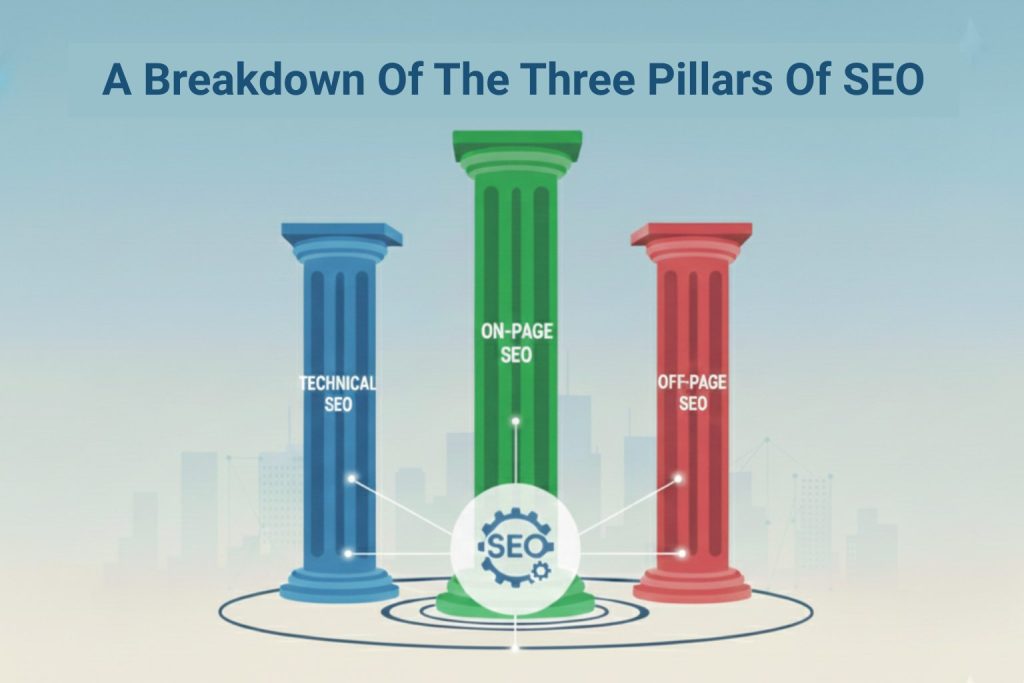
Understanding the three pillars of SEO is essential for anyone looking to build a strong online presence. Moreover, whether you’re just learning SEO fundamentals or want to refine your strategy, knowing how On-Page SEO, Off-Page SEO, and Technical SEO work together is the key to long-term success. In this guide, we’ll break down the types of SEO, how they influence rankings, and why they form the true SEO foundation every website needs. Additionally, if you’re looking for professional help, the best SEO agency in Nepal can guide you through every step of this process. Why the Three Pillars of SEO Matter Search engines like Google use hundreds of SEO ranking factors, however, almost all of them fall under one of these three pillars of SEO: 1. On-Page SEO 2. Off-Page SEO 3. Technical SEO Consequently, understanding these pillars helps you clearly see how SEO works and what areas to optimize for better visibility, traffic, and authority. 1. On-Page SEO: The Content & Elements You Control On-Page SEO is the first and most visible pillar. It focuses on the elements directly on your website that help search engines understand your content. Furthermore, it improves the user experience by making information easier to find. Key Components of On-Page SEO 1. Keyword Optimization Targeting the right keywords, such as three pillars of SEO and secondary keywords like on-page SEO or SEO fundamentals, helps your pages match user intent. For example, placing them in headings, meta descriptions, and naturally within content boosts relevance. 2. High-Quality Content Strong content is the heart of SEO. It should: Answer user questions thoroughly Be readable and well-structured Include relevant keywords naturally Demonstrate authority and expertise 3. Optimized Title Tags & Meta Descriptions These help search engines and users understand what your page is about, therefore improving click-through rates. 4. Internal Linking Internal links guide both users and search engines to related pages, strengthening your overall SEO foundation. 5. Image & Media Optimization Adding alt text, compressing images, and using descriptive file names improves page performance and accessibility. In fact, well-optimized media can also contribute to higher rankings in image search results. Overall, On-Page SEO ensures your content is visible, relevant, and valuable, a key part of how SEO works. 2. Off-Page SEO: Building Authority Beyond Your Website Off-Page SEO strengthens your website’s credibility and trustworthiness across the internet. In other words, it focuses on proving your authority beyond the content on your own pages. Key Components of Off-Page SEO 1. Backlinks High-quality backlinks remain the top Off-Page SEO ranking factor. Links from authoritative websites signal to search engines that your content is reliable. 2. Brand Mentions Even unlinked brand mentions contribute to your online presence and trust signals. 3. Social Media Signals While not direct ranking factors, social media engagement boosts visibility and drives referral traffic. Moreover, it helps in building your brand’s online reputation. 4. Local SEO For local businesses, optimizing Google Business Profiles, reviews, and citations helps improve visibility in location-based searches. You can explore our Local SEO Service to enhance your presence. Overall, Off-Page SEO proves your authority and is an important part of understanding the types of SEO. 3. Technical SEO: The Backbone of Website Performance Technical SEO forms the third pillar of SEO and is often overlooked. However, it ensures your website is structured for both users and search engine bots. Key Components of Technical SEO 1. Site Speed & Performance Fast-loading pages improve user experience and are a major SEO ranking factor. Therefore, optimizing speed should always be a priority. 2. Mobile-Friendly Design With mobile-first indexing, Google primarily ranks the mobile version of your site, making responsiveness essential. 3. Crawlability & Indexing Search engines must be able to discover, read, and index your pages. This includes: XML sitemaps Robots.txt Canonical tags Clean link structure 4. HTTPS & Site Security Secure sites (HTTPS) are trusted and favored by search engines. In fact, Google has confirmed that security is a minor ranking factor. 5. Structured Data (Schema Markup) Schema helps search engines better understand your content and enables rich results like FAQs, product info, or breadcrumbs. 6. Fixing Technical Errors This includes repairing 404 errors, duplicate content, redirect chains, and broken links. Additionally, it prevents ranking losses caused by crawl issues. Technical SEO builds a strong SEO foundation guide that supports all content and authority-building efforts. How SEO Works When All Three Pillars Connect The real power of SEO comes when all three pillars work together: On-Page SEO makes your content relevant. Off-Page SEO proves you’re trustworthy. Technical SEO ensures your website is fast, secure, and accessible. However, if one pillar is weak, your entire SEO strategy becomes unstable. On the other hand, when all three are strong, your site gains better rankings, more organic traffic, and improved user engagement. Mastering the Types of SEO for Long-Term Success Whether you’re just starting with SEO fundamentals or refining an existing strategy, focusing on the three pillars of SEO is the clearest and most effective way to grow. Contact us!